Bankruptcy (Chapter 7 & 13) in Trenton Metro
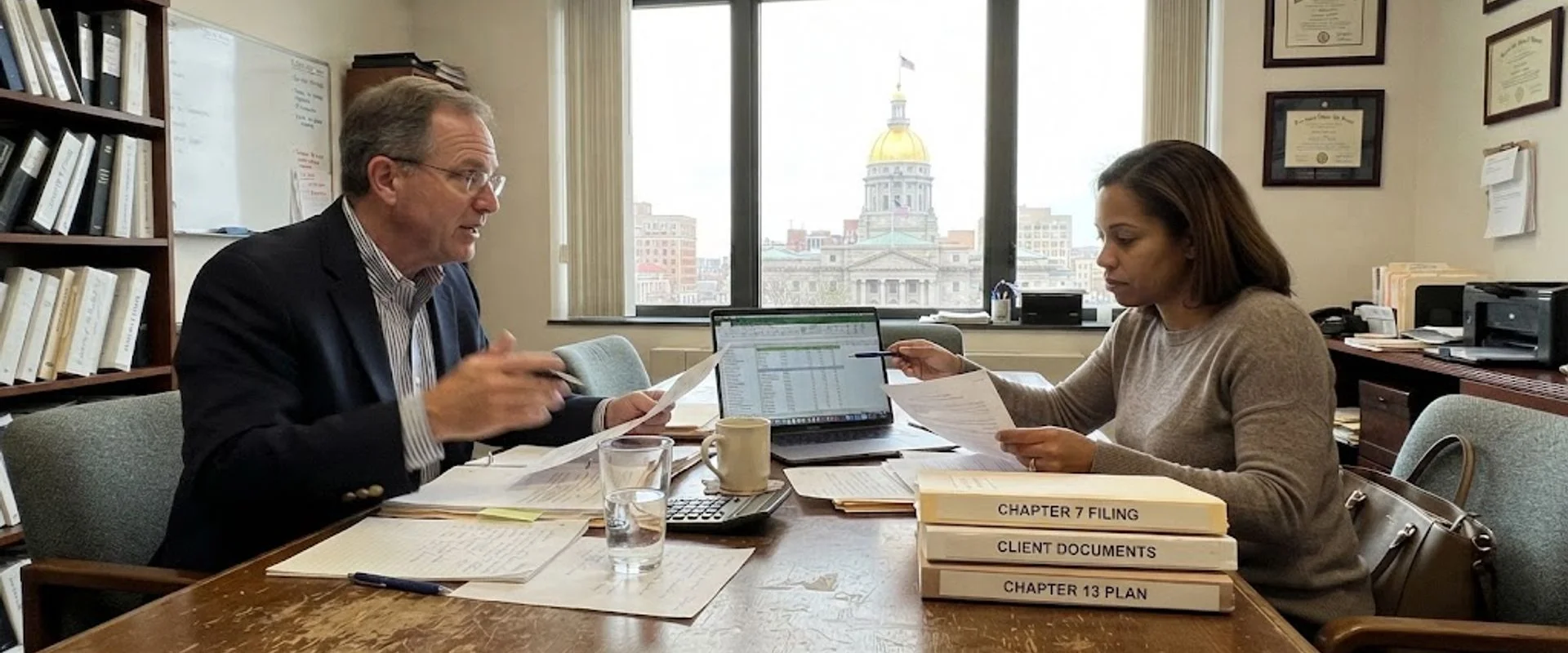
When a foreclosure notice lands, bankruptcy is often the tool that buys time or restructures the debt behind it. A Chapter 7 filing can discharge unsecured debt and, through the automatic stay, pause a sheriff's sale while the case works through the New Jersey federal courts. A Chapter 13 filing goes further for homeowners: it lets you catch up on missed mortgage payments over a three to five year repayment plan, which is often the only way to keep the house once you're behind. We've listed 25 bankruptcy attorneys serving the Trenton Metro area, and most of them work foreclosure cases regularly, either directly or in coordination with a homeowner's mortgage lender or servicer.
What this service actually involves
A bankruptcy filing starts with a credit counseling course, a full accounting of income, assets, debts, and property, and a decision on which chapter fits your situation. Chapter 7 (liquidation) suits people with limited income and mostly unsecured debt, but it won't stop a foreclosure long-term if you can't pay the mortgage arrears. Chapter 13 (reorganization) is the more common route for homeowners trying to save a house, since it folds missed payments into a court-approved plan. Either way, the attorney handles the petition, the schedules, the meeting of creditors (the "341 meeting"), and any motions the lender files to lift the automatic stay.
What to look for in a bankruptcy attorney
- Experience specifically with mortgage arrears and lift-stay motions, not just general consumer debt
- A clear, written fee structure (Chapter 13 fees are often partly rolled into the repayment plan; Chapter 7 fees are usually paid up front)
- Familiarity with the local New Jersey bankruptcy court and trustees, since local practice varies
- Straight talk about whether bankruptcy will actually save the house, versus a loan modification, short sale, or other foreclosure defense route
- Responsiveness: deadlines in bankruptcy and foreclosure cases move fast, and a missed filing date can cost you the case
How our scoring works
Each firm on this page is scored using the criteria explained on our methodology page, which weighs factors like verified client feedback, responsiveness, case experience, and how consistently a firm delivers on what it promises. Use the scores as a starting point, then call two or three firms directly to compare their read on your specific situation before you decide.
Get matched with bankruptcy (chapter 7 & 13)
Tell us what you need and we'll connect you with the right legal help. It's free and there's no obligation.
All bankruptcy (chapter 7 & 13), ranked by score and relevance
We found 25 businesses offering bankruptcy (chapter 7 & 13); 15 met the criteria for the scored directory. The order weighs each business's overall score by how much of its reviewed work is bankruptcy (chapter 7 & 13), so a lower-scored specialist can rank above a higher-scored generalist. Filter and sort below, or open the full map view.






When you submit a quote or contact form through this site, your enquiry may be shared with partner providers who can complete the work. We may receive a referral fee, but our rankings and scores are based solely on our published scoring method and are not affected by referral fees.
Common questions about bankruptcy (chapter 7 & 13)
- How much does a bankruptcy attorney cost for a Chapter 7 or Chapter 13 case?
- Chapter 7 attorney fees typically run a flat rate paid before filing, since the fee itself is usually treated as dischargeable debt if unpaid. Chapter 13 fees are usually higher because the case runs for years, but a portion is commonly built into the monthly plan payment rather than paid up front. Get a written fee agreement and ask what's included, such as extra charges for lift-stay motions or amended filings.
- How often do homeowners actually need this to stop a foreclosure?
- Not every foreclosure case needs bankruptcy. It becomes relevant mainly when a homeowner has fallen behind on mortgage payments and other options, like loan modification or a repayment plan with the servicer, haven't worked or aren't available. Chapter 13 is the more common filing in these cases because it's built to catch up arrears over time rather than just wipe out debt.
- What should I expect once I hire a bankruptcy attorney?
- Expect an intake meeting to gather financial documents, a required credit counseling course, then the actual filing. Once filed, the automatic stay generally halts collection actions and pending sheriff's sales immediately, though a lender can ask the court to lift the stay if payments still aren't being made. Chapter 13 cases involve ongoing plan payments and a final discharge only after the plan is completed, usually years later.
- How can I judge whether a bankruptcy attorney is good before hiring them?
- Ask how many Chapter 13 cases they've handled where the homeowner kept the house, not just how many cases they've filed overall. Ask who actually shows up at the 341 meeting and handles court appearances, since some firms hand this off to associates. And check whether they're upfront about cases where bankruptcy isn't the right answer, since a firm that only sells filings isn't giving you full advice.
Guides to choosing bankruptcy (chapter 7 & 13)
- How Chapter 13 bankruptcy catches up mortgage arrears, step by step
How a Chapter 13 repayment plan works when the goal is stopping foreclosure and catching up missed mortgage payments over time.