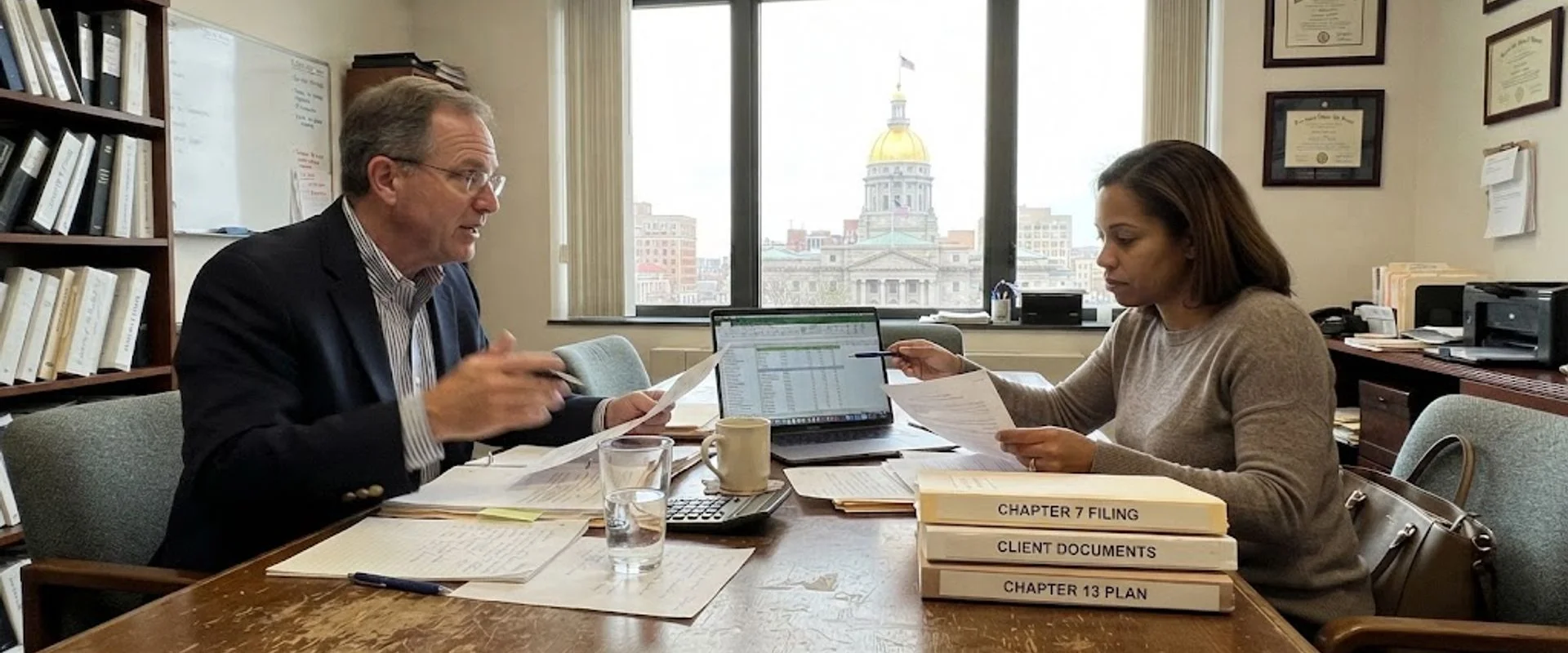
Bankruptcy is often the last stop for a homeowner who can't stop a foreclosure any other way. Chapter 7 wipes out unsecured debt and buys a short pause through the automatic stay, but it usually won't save a house with much equity or catch up missed mortgage payments. Chapter 13 is the one built for that: it sets up a 3 to 5 year repayment plan that lets a homeowner cure the mortgage arrears over time while keeping the property, as long as they have steady income to fund the plan. Picking between the two, and structuring the filing correctly, is where a bankruptcy attorney earns their fee.
What to look for in a bankruptcy attorney
Filing bankruptcy to stop a foreclosure is time-sensitive: the automatic stay only kicks in once the case is actually filed, so responsiveness matters as much as experience. Look for a Hamilton attorney who handles Chapter 13 plans regularly (not just occasional Chapter 7 cases), can explain the means test and plan payment clearly before you sign anything, and is upfront about fees, since attorney costs in Chapter 13 are often rolled into the repayment plan itself rather than paid all at once. Ask how many active cases they're juggling and who in the office actually answers questions once the case is filed, since that's usually where communication breaks down.
Our scoring for the 6 firms in this category weighs how they handle foreclosure-specific bankruptcy work: speed in filing to stop a sale, clarity on Chapter 7 vs. Chapter 13 fit, fee transparency, and client feedback on communication during the case. See the full breakdown and rankings in our best bankruptcy attorneys guide, and read our methodology for how we score and verify every firm.