Debt settlement vs bankruptcy: which one actually stops collection calls and protects your home
By Thomas Osei · Updated 2026-07-20
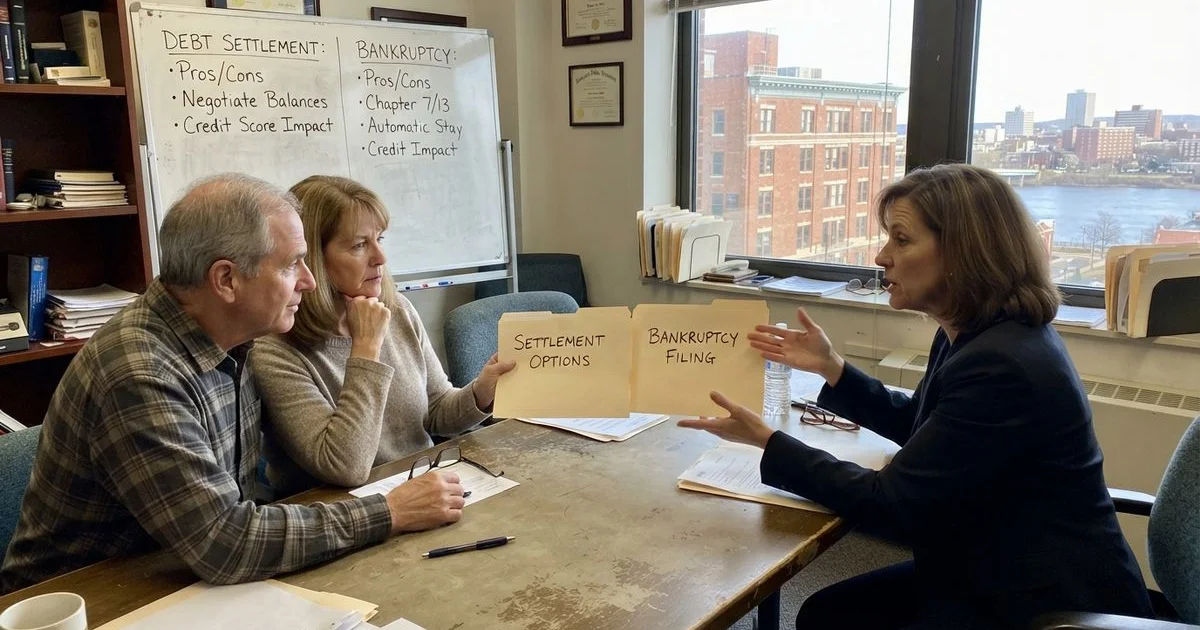
When money is tight and both unsecured debt and a mortgage are behind, it’s common to conflate two very different tools: debt settlement and bankruptcy. They solve different problems, and only one of them has any direct power over a foreclosure sale.
This is general information, not legal or financial advice. A debt settlement or collections defense attorney can review your specific creditors and accounts before you commit to either path.
What each one actually does
Debt settlement is a negotiation. You, or a company acting on your behalf, offer a creditor a lump sum that’s less than the full balance in exchange for closing the account as settled. It applies to unsecured debt like credit cards and medical bills, not to a mortgage. Nothing about debt settlement is automatic or legally enforced; the creditor can accept, reject, or keep pursuing collection while you negotiate.
Bankruptcy is a federal court process. Filing it triggers an automatic stay, which is a legal order that immediately halts most creditor contact, wage garnishments, and yes, a scheduled foreclosure sale, the moment the case is filed. Chapter 7 discharges qualifying unsecured debt outright. Chapter 13 sets up a repayment plan, commonly used specifically to catch up mortgage arrears over three to five years while keeping the house.
| Debt settlement | Bankruptcy (Chapter 7 or 13) | |
|---|---|---|
| Stops collection calls | Not automatically | Yes, immediately via automatic stay |
| Pauses a foreclosure sale | No | Yes, immediately |
| Applies to mortgage debt | No, unsecured debt only | Yes, especially Chapter 13 |
| Credit impact | Settled-for-less mark, multi-year | Larger single impact, defined recovery path |
| Possible tax consequence | Forgiven debt may count as taxable income | Discharged debt in bankruptcy generally is not taxable |
| Typical timeline | Weeks to months per account | Chapter 7: months; Chapter 13: 3-5 year plan |

Why this distinction matters if foreclosure is the real worry
If your biggest fear is losing the house, debt settlement alone won’t touch that clock. It can free up monthly income by reducing what you owe elsewhere, which might make your mortgage payment more affordable going forward, but it has no legal mechanism that pauses a pending foreclosure case or sale date. Only options tied directly to the mortgage, such as a loan modification, a repayment plan, or a Chapter 13 filing’s automatic stay, actually stop or slow that specific process.
That said, the two aren’t mutually exclusive. Some homeowners settle smaller unsecured debts to reduce monthly obligations while separately negotiating with their mortgage servicer or pursuing bankruptcy for the mortgage-specific problem.
The tax and credit tradeoffs worth knowing
Forgiven debt through settlement is often reported to the IRS as income on a 1099-C, which can create a tax bill the following year that catches people off guard. Bankruptcy discharge generally does not create the same taxable-income problem. On the credit side, a string of settled accounts can look almost as damaging as a bankruptcy on a credit report, so “settlement is always the gentler option” isn’t a safe assumption.
Verify the debt before you settle anything
Before agreeing to a settlement, confirm the debt is actually yours, for the amount claimed, and still within the legal window a creditor can sue over. Debt gets sold between collectors more than once, and errors in the amount owed or who currently owns the debt aren’t rare. Sending a written debt validation request before negotiating protects you from settling, or worse, admitting to, a debt that wasn’t accurate or collectible in the first place.
Which one fits your situation
Debt settlement tends to make sense when the mortgage itself is current or manageable and the real problem is unsecured debt piling up. Bankruptcy, particularly Chapter 13, tends to make sense when the mortgage is the debt at risk and you need the automatic stay’s legal force to buy time. A short consultation with an attorney who handles both areas can usually sort out which problem you’re actually solving for, and if cost is the main hesitation, what a foreclosure attorney typically costs in New Jersey breaks down typical fee ranges.
The homepage lists local attorneys ranked using the process on the how we score page, which is a reasonable place to start comparing options before you decide.
Frequently asked questions
- Does debt settlement stop collection calls immediately?
- No. Debt settlement negotiates with a creditor to accept less than what's owed, but it doesn't create any legal protection. Collection calls and even lawsuits can continue while a settlement is being negotiated unless the creditor agrees to pause them.
- Does bankruptcy stop collection calls right away?
- Yes. Filing bankruptcy triggers an automatic stay, a court order that legally requires creditors and collectors to stop contacting you and pause most collection actions, including a scheduled foreclosure sale, the moment the case is filed.
- Will debt settlement or bankruptcy hurt my credit more?
- Both affect credit, but differently. Settled accounts are marked as settled for less than owed, which lingers for years. A bankruptcy is a bigger single hit but has a defined recovery timeline afterward, and many people start rebuilding credit within a couple of years.
- Can debt settlement save my house from foreclosure?
- Settling unsecured debt (credit cards, medical bills) frees up monthly cash flow, which can indirectly help you afford mortgage payments, but it does nothing to stop a foreclosure already in progress. Only a mortgage-specific solution, like a modification or bankruptcy's automatic stay, directly pauses foreclosure.